Skip over navigation
Cambridge University Faculty of Mathematics NRich logo
menu search
  • Teachers expand_more
    • Early years
    • Primary
    • Secondary
    • Post-16
    • Events
    • Professional development
  • Students expand_more
    • Primary
    • Secondary
    • Post-16
  • Parents expand_more
    • Early Years
    • Primary
    • Secondary
    • Post-16
  • Problem-Solving Schools
  • About NRICH expand_more
    • About us
    • Impact stories
    • Support us
    • Our funders
    • Contact us
  • search

Or search by topic

Number and algebra

  • The Number System and Place Value
  • Calculations and Numerical Methods
  • Fractions, Decimals, Percentages, Ratio and Proportion
  • Properties of Numbers
  • Patterns, Sequences and Structure
  • Algebraic expressions, equations and formulae
  • Coordinates, Functions and Graphs

Geometry and measure

  • Angles, Polygons, and Geometrical Proof
  • 3D Geometry, Shape and Space
  • Measuring and calculating with units
  • Transformations and constructions
  • Pythagoras and Trigonometry
  • Vectors and Matrices

Probability and statistics

  • Handling, Processing and Representing Data
  • Probability

Working mathematically

  • Thinking mathematically
  • Developing positive attitudes
  • Cross-curricular contexts

Advanced mathematics

  • Decision Mathematics and Combinatorics
  • Advanced Probability and Statistics
  • Mechanics
  • Calculus

For younger learners

  • Early Years Foundation Stage

River Crossing

Age 11 to 18
Challenge Level Yellow star
  • Problem
  • Getting Started
  • Student Solutions
  • Teachers' Resources

You may have met this introductory problem before, but have a think about it in preparation for tackling the main one that follows.
 

The fox, the hen and the corn
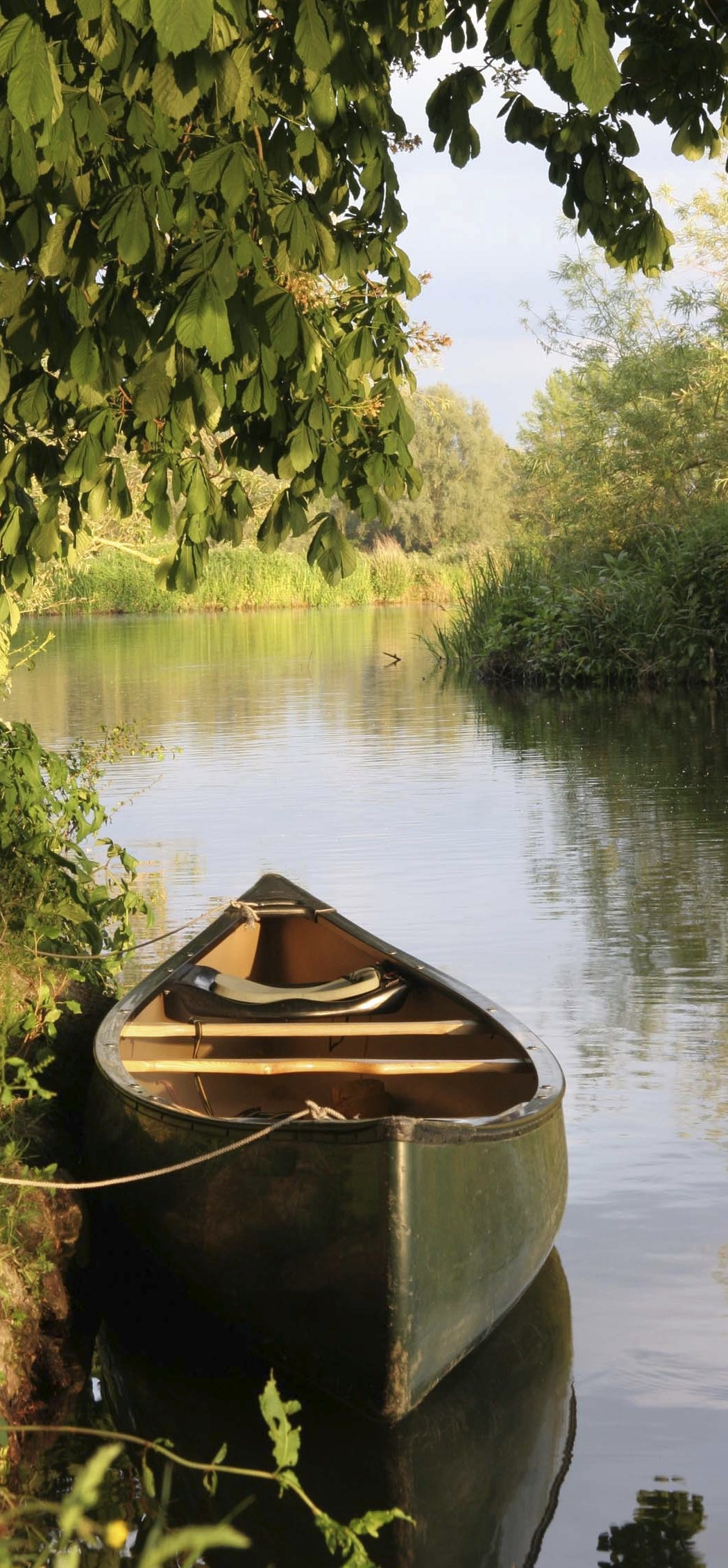
Once upon a time a farmer went to market and bought a fox, a hen and a sack of corn.

The farmer came to a river which needed to be crossed by boat. He could take only one of his purchases - the fox, or the hen, or the sack of corn - in the boat at a time.

If left together on the riverbank without the farmer, the fox would eat the hen, or the hen would eat the corn.

Can you find a way for the farmer to get all of them across the river safely? (Note - only the farmer can row the boat!)

Can you find more than one way of getting them across with the minimum number of crossings?


There are two possible ways of getting them all across in seven crossings:

Hen & Farmer $\rightarrow$ 
$\leftarrow$ Farmer
Fox & Farmer $\rightarrow$ 
$\leftarrow$ Hen & Farmer
Corn & Farmer $\rightarrow$ 
$\leftarrow$ Farmer
Hen & Farmer $\rightarrow$

Hen & Farmer $\rightarrow$ 
$\leftarrow$ Farmer
Corn & Farmer $\rightarrow$ 
$\leftarrow$ Hen & Farmer
Fox & Farmer $\rightarrow$ 
$\leftarrow$ Farmer
Hen & Farmer $\rightarrow$


Adults and children

Two adults and two children need to cross a river in a rowing boat. Can you determine how to get everyone across, and how many crossings are needed, given the following information?

  • All adults weigh the same
  • Each child weighs half as much as an adult
  • The boat can only carry the weight of one adult
  • Adults and children can row the boat
  • The boat must have someone in it to row it!

What if there were $3$ adults and $2$ children?
What if there were $100$ adults and $2$ children?
What if there were $n$ adults and $2$ children?


If you enjoyed these problems, you may also like to take a look at Crossing the Bridge.

With thanks to Don Steward, whose ideas formed the basis of this problem.


Notes and Background


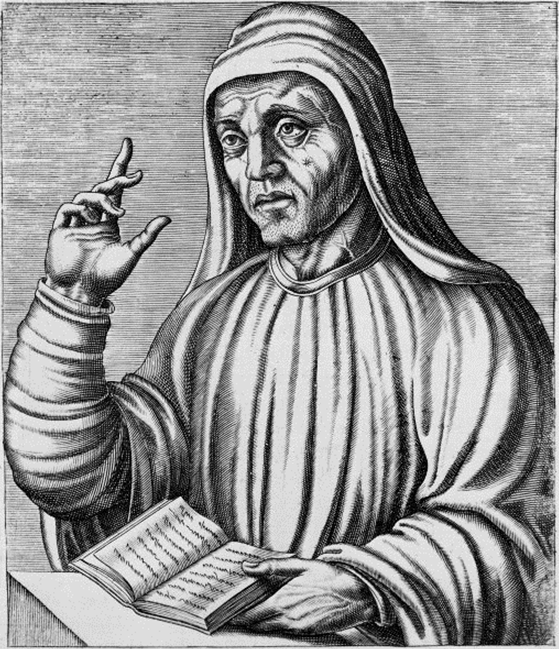
When you try to solve these 'river crossing' puzzles, you are attempting some of the same problems that were set by Alcuin, an ecclesiastic from the 9th century, for the Emperor Charlemagne.

Alcuin's version of Problem 1 concerned a wolf, a goat and a cabbage.



You may also like

Have You Got It?

Can you explain the strategy for winning this game with any target?

Latin Numbers

Can you create a Latin Square from multiples of a six digit number?

Dozens

Can you select the missing digit(s) to find the largest multiple?

  • Tech help
  • Accessibility Statement
  • Sign up to our newsletter
  • Twitter X logo

The NRICH Project aims to enrich the mathematical experiences of all learners. To support this aim, members of the NRICH team work in a wide range of capacities, including providing professional development for teachers wishing to embed rich mathematical tasks into everyday classroom practice.

NRICH is part of the family of activities in the Millennium Mathematics Project.

University of Cambridge logo NRICH logo