Skip over navigation
Cambridge University Faculty of Mathematics NRich logo
menu search
  • Teachers expand_more
    • Early years
    • Primary
    • Secondary
    • Post-16
    • Events
    • Professional development
  • Students expand_more
    • Primary
    • Secondary
    • Post-16
  • Parents expand_more
    • Early Years
    • Primary
    • Secondary
    • Post-16
  • Problem-Solving Schools
  • About NRICH expand_more
    • About us
    • Impact stories
    • Support us
    • Our funders
    • Contact us
  • search

Or search by topic

Number and algebra

  • The Number System and Place Value
  • Calculations and Numerical Methods
  • Fractions, Decimals, Percentages, Ratio and Proportion
  • Properties of Numbers
  • Patterns, Sequences and Structure
  • Algebraic expressions, equations and formulae
  • Coordinates, Functions and Graphs

Geometry and measure

  • Angles, Polygons, and Geometrical Proof
  • 3D Geometry, Shape and Space
  • Measuring and calculating with units
  • Transformations and constructions
  • Pythagoras and Trigonometry
  • Vectors and Matrices

Probability and statistics

  • Handling, Processing and Representing Data
  • Probability

Working mathematically

  • Thinking mathematically
  • Developing positive attitudes
  • Cross-curricular contexts

Advanced mathematics

  • Decision Mathematics and Combinatorics
  • Advanced Probability and Statistics
  • Mechanics
  • Calculus

For younger learners

  • Early Years Foundation Stage

Matching Fractions, Decimals and Percentages

Age 7 to 14
Challenge Level Yellow star
Primary curriculum
Secondary curriculum
  • Problem
  • Getting Started
  • Student Solutions
  • Teachers' Resources


Why do this problem?

This game can be played to improve students' recognition of equivalent fractions, decimals and percentages.

Possible approach
 

There are three sets of printable cards, which you may find useful. Set A is the easiest, and set C is the hardest. Each half (top/bottom) is a stand alone set so you can combine these to form the size and difficulty that you would like.
For example, you might want to combine the bottom half of set A with the top half of set B, or all of set B with the top half of set C.

If you print double sided, then the cards will have an NRICH logo on the back. Otherwise, you can just print the first page.


 Set A, Set B, Set C

Demonstrate the game using the interactivity or the printed cards. Then invite students to play the game, moving on to the next level of difficulty when they are ready.

Level 1 on the interactivity uses cards from Set A.
Level 2 on the interactivity uses cards from Sets A & B.
Level 3 on the interactivity uses cards from Set B.
Level 4 on the interactivity uses cards from Sets B & C.
Level 5 on the interactivity uses cards from Set C.

Bring the class together and ask for any tips or strategies that help with the game.

You could invite students to create their own sets of cards that they can share and use to play different versions of the game.


Key questions

What could match with 0.3?
What could match with 25%?
What could match with $\frac35$?
Which cards did you find easier to match?
Which cards did you find more difficult to match?

Possible support

Encourage students to play in face-up mode a few times before moving on to face-down mode.

Matching Fractions can be used to help children develop their understanding of fractions before moving on to this activity.

Possible extension


Students can play the Fractions and Percentages Card Game where the card matching requires calculations.


You may also like

Sept 03

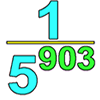
What is the last digit of the number 1 / 5^903 ?

Too Close to Call

Weekly Problem 24 - 2012
Can you put these very close fractions into order?

Fractional Wall

Using the picture of the fraction wall, can you find equivalent fractions?

  • Tech help
  • Accessibility Statement
  • Sign up to our newsletter
  • Twitter X logo

The NRICH Project aims to enrich the mathematical experiences of all learners. To support this aim, members of the NRICH team work in a wide range of capacities, including providing professional development for teachers wishing to embed rich mathematical tasks into everyday classroom practice.

NRICH is part of the family of activities in the Millennium Mathematics Project.

University of Cambridge logo NRICH logo