
Skip over navigation
Cambridge University Faculty of Mathematics NRich logo
menu search
  • Teachers expand_more
    • Early years
    • Primary
    • Secondary
    • Post-16
    • Events
    • Professional development
  • Students expand_more
    • Primary
    • Secondary
    • Post-16
  • Parents expand_more
    • Early Years
    • Primary
    • Secondary
    • Post-16
  • Problem-Solving Schools
  • About NRICH expand_more
    • About us
    • Impact stories
    • Support us
    • Our funders
    • Contact us
  • search

Or search by topic

Number and algebra

  • The Number System and Place Value
  • Calculations and Numerical Methods
  • Fractions, Decimals, Percentages, Ratio and Proportion
  • Properties of Numbers
  • Patterns, Sequences and Structure
  • Algebraic expressions, equations and formulae
  • Coordinates, Functions and Graphs

Geometry and measure

  • Angles, Polygons, and Geometrical Proof
  • 3D Geometry, Shape and Space
  • Measuring and calculating with units
  • Transformations and constructions
  • Pythagoras and Trigonometry
  • Vectors and Matrices

Probability and statistics

  • Handling, Processing and Representing Data
  • Probability

Working mathematically

  • Thinking mathematically
  • Developing positive attitudes
  • Cross-curricular contexts

Advanced mathematics

  • Decision Mathematics and Combinatorics
  • Advanced Probability and Statistics
  • Mechanics
  • Calculus

For younger learners

  • Early Years Foundation Stage

A Frosty Puddle

Age 16 to 18
Challenge Level Yellow starYellow star
  • Problem
  • Getting Started
  • Student Solutions
  • Teachers' Resources

If you are getting stuck on this question, start by reading A Guide to Problem Solving.  You can also use the Getting Started tab, where you will find some hints and tips to guide you through the question.

This problem follows on from Frosty the Snowman.

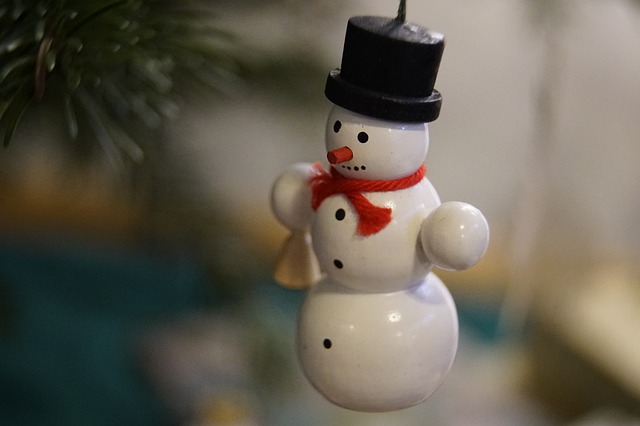
Frosty the snowman is made from two uniform spherical snowballs, of initial radii $2R$ and $3R.$ The smaller (which is his head) stands on top of the larger.

As each snowball melts, its volume decreases at a rate which is directly proportional to its surface area, the constant of proportionality being the same for both snowballs. During melting each snowball remains spherical and uniform.

Let $V$ and $h$ denote Frosty's total volume and height at time $t$. 

  • Show that, for $2R <h \le 10R, \qquad$ $\dfrac{\mathrm{d} V}{\mathrm{d} h}=\frac{\pi} 8 (h^2 + 4R^2)$
     
  • Derive the corresponding expression for $0 \le h < 2R$
     
  • Sketch $\dfrac{\mathrm{d} V}{\mathrm{d} h}$ as a function of $h$ for $4R \ge h \ge 0$.  Hence give a rough sketch of $V$ as a function of $h$.

This question has been adapted and changed several times since it was first published.  You can see some of the various versions via the Teachers Resources tab.

Adapted from STEP Mathematics I, 1991, Q2. Question reproduced by kind permission of Cambridge Assessment Group Archives. The question remains Copyright University of Cambridge Local Examinations Syndicate ("UCLES"), All rights reserved.

  • Tech help
  • Accessibility Statement
  • Sign up to our newsletter
  • Twitter X logo

The NRICH Project aims to enrich the mathematical experiences of all learners. To support this aim, members of the NRICH team work in a wide range of capacities, including providing professional development for teachers wishing to embed rich mathematical tasks into everyday classroom practice.

NRICH is part of the family of activities in the Millennium Mathematics Project.

University of Cambridge logo NRICH logo