Skip over navigation
Cambridge University Faculty of Mathematics NRich logo
menu search
  • Teachers expand_more
    • Early years
    • Primary
    • Secondary
    • Post-16
    • Events
    • Professional development
  • Students expand_more
    • Primary
    • Secondary
    • Post-16
  • Parents expand_more
    • Early Years
    • Primary
    • Secondary
    • Post-16
  • Problem-Solving Schools
  • About NRICH expand_more
    • About us
    • Impact stories
    • Support us
    • Our funders
    • Contact us
  • search

Or search by topic

Number and algebra

  • The Number System and Place Value
  • Calculations and Numerical Methods
  • Fractions, Decimals, Percentages, Ratio and Proportion
  • Properties of Numbers
  • Patterns, Sequences and Structure
  • Algebraic expressions, equations and formulae
  • Coordinates, Functions and Graphs

Geometry and measure

  • Angles, Polygons, and Geometrical Proof
  • 3D Geometry, Shape and Space
  • Measuring and calculating with units
  • Transformations and constructions
  • Pythagoras and Trigonometry
  • Vectors and Matrices

Probability and statistics

  • Handling, Processing and Representing Data
  • Probability

Working mathematically

  • Thinking mathematically
  • Developing positive attitudes
  • Cross-curricular contexts

Advanced mathematics

  • Decision Mathematics and Combinatorics
  • Advanced Probability and Statistics
  • Mechanics
  • Calculus

For younger learners

  • Early Years Foundation Stage

Ab Surd Ity

Age 16 to 18
Challenge Level Yellow star
  • Problem
  • Getting Started
  • Student Solutions
  • Teachers' Resources
Why do this problem?

The problem provides good practice in the manipuation of surds and in algebra (involving the expansions of $(p+q)^2$ and $(p+q)^3$, the difference of two squares and the use of the Remainder Theorem to factorise a cubic equation). If care is taken with the algebra the result comes out in a satisfyingly neat way. The question looks complicated but it turns out to be simple.

Possible approach
Although this is a longer, two part, question, the Hint gives sufficient guidance for this to be set to a class to work on independently.

Key questions

If 'extra' solutions are introduced by squaring or cubing, how do you decide which are the correct solutions?

This is how the problem was used by Peter Thomas, a Sixth Form College teacher:

I was absent at a meeting and set the class work to consolidate topics taught the previous lesson. The work was routine exercises from a textbook (Emanuel and Wood) which I encouraged them to approach selectively (what I called 'bread and butter' with some specific questions as a 'doggy bag' for homework).

Alongside this I set them the four nrich problems as 'cake' with the instruction to tackle at least one.

Ab Surd Ity (this problem)
See also Power Quady
System Speak
Root to Poly

Then over the following couple of weeks the problems were discussed in lessons as they related to the topics being covered.

The reaction was positive. The teacher covering the lesson reported strong engagement. From the individuals he mentioned this extended to those who liked to finish quickly then sit back. When the problems were discussed subsequently the contributions made suggested most had had a go and got somewhere with at least one problem.

It livened up what could have been a rather boring lesson of consolidation.


You may also like

Absurdity Again

What is the value of the integers a and b where sqrt(8-4sqrt3) = sqrt a - sqrt b?

Em'power'ed

Find the smallest numbers a, b, and c such that: a^2 = 2b^3 = 3c^5 What can you say about other solutions to this problem?
Route to Root

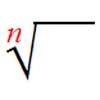
A sequence of numbers x1, x2, x3, ... starts with x1 = 2, and, if you know any term xn, you can find the next term xn+1 using the formula: xn+1 = (xn + 3/xn)/2 . Calculate the first six terms of this sequence. What do you notice? Calculate a few more terms and find the squares of the terms. Can you prove that the special property you notice about this sequence will apply to all the later terms of the sequence? Write down a formula to give an approximation to the cube root of a number and test it for the cube root of 3 and the cube root of 8. How many terms of the sequence do you have to take before you get the cube root of 8 correct to as many decimal places as your calculator will give? What happens when you try this method for fourth roots or fifth roots etc.?

  • Tech help
  • Accessibility Statement
  • Sign up to our newsletter
  • Twitter X logo

The NRICH Project aims to enrich the mathematical experiences of all learners. To support this aim, members of the NRICH team work in a wide range of capacities, including providing professional development for teachers wishing to embed rich mathematical tasks into everyday classroom practice.

NRICH is part of the family of activities in the Millennium Mathematics Project.

University of Cambridge logo NRICH logo