Skip over navigation


What about starting with a rectangle like this ...
Then you could mark it at half-way or elsewhere ...
Cutting it Out
Age 5 to 11
Challenge Level 

Cutting it Out
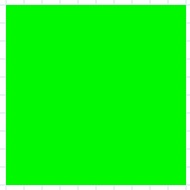
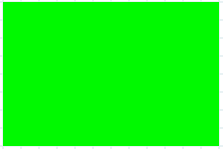
So, I started with a $10$ by $10$ green square,
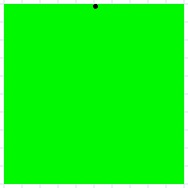
I marked the half-way point along the top edge,
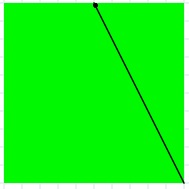
I then drew a line from that point to a corner at the base.
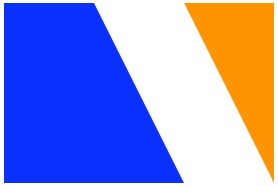
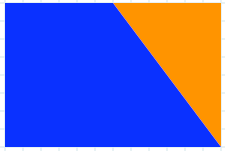
Then I cut the corner piece out along that line and made a change of colour, so I ended up with these two shapes:
What can you say about these two shapes?
Can you say something about the relationship between them?
Do you have any other ideas about these two shapes?
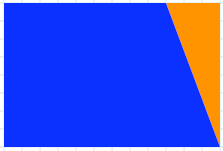
What about starting with a rectangle like this ...
Then you could mark it at half-way or elsewhere ...
What can you say now?
Why do this problem?
This problem is good for pupils to be able to explore the relationships between 2D shapes. The open-ended nature of the task means that pupils can pursue whatever excites them and some may surprise you. When different examples have been tried there is a chance to compare, analyse and possibly generalise.
Possible approach
It would be good to demonstrate how the two shapes are made from a square to begin this activity. Either using a drawing programme on the interactive whiteboard, or by having a large square made from card pinned on the board, show the children the process. Preferably do this in silence so that the group has to watch what you're doing very carefully. Once you have the two shapes, ask pairs to
talk about what you did. Share ideas amongst the whole group so that you clarify the 'rules' you were using.
Then, encourage pairs or small groups to discuss the relationships between the two shapes. You could ask children to consider what is the same and what is different about them. Give them plenty of opportunities to explore, discuss, argue, etc. You may like to bring them together to discuss what they've found out, which might include theories about area, side length, perimeter ... Encourage
learners to state reasons for the relationships and how they know.
They can then be introduced to generating their own two shapes in a similar way and they may have particular theories to test. Will the same relationship hold for different shapes? Will the same relationships hold for a line drawn differently in the square? Encourage these types of 'what if ...?' questions.
If learners made posters of their findings, the work could make an informative and engaging display.
Key questions
Tell me about your shapes.
What is the same about the shapes?
What is different about the two shapes?
What can you tell me about what you've found connecting the two shapes?
Possible extension
It might appeal to some children to investigate cutting into more than two pieces.
Possible support
Having plenty of squares of paper/card already available for children to cut will be helpful as many will need to handle and manipulate the shapes. Measuring equipment and squared paper may also be useful.You may also like
Cutting Corners
Can you make the most extraordinary, the most amazing, the most unusual patterns/designs from these triangles which are made in a special way?
Bracelets
Investigate the different shaped bracelets you could make from 18 different spherical beads. How do they compare if you use 24 beads?