

Going Round in Circles


Going Round in Circles printable worksheet
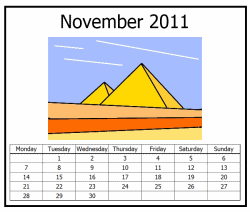
Charlie said: "It's Monday today, so it will be Monday again in $7$ days..
and in $770$ days...
and in $140$ days...
and in $35 035$ days...
and in $14 000 000 007$ days!"
Alison said: "and it will be Wednesday in $2$ days...
and in $72$ days...
and in $702$ days...
and in $779$ days...
and in $14 777 002$ days!"
Do you agree with all of Charlie's and Alison's statements?
Charlie and Alison chose numbers that were easy to work with. Can you see why they were chosen?
Can you make up some similar statements of your own?
If today is Monday, what day will it be in $1000$ days' time?
Once you've had a go, have a look at how two students got started on this question:
Ann's Method:
Can you suggest how Ann might continue?
Luke's Method:
Then I can work out $142 \times 7$..."
Can you suggest how Luke might continue?
Can you suggest any other methods for solving the problem?
Now try to suggest efficient methods to answer the following questions.
How would you work them out in your head?
What would you do if you had pencil and paper?
How would your method change if you had a calculator?
- If it is autumn now, what season will it be in $100$ seasons?
- If it is November, what month will it be in $1000$ months?
- A railway line has $27$ stations on a circular loop. If I fall asleep and travel through $312$ stations, where will I end up in relation to where I started?
- If it is midday now, will it be light or dark in $539$ hours?
- If a running track is $400$ metres around, where will I be in relation to the start after running 6 miles (approximately $9656$ metres)?
- I was facing North and then spun around through $945 ^\circ$ clockwise. In what direction was I facing at the end?
- If I get on at the bottom of a fairground wheel and the wheel turns through $5000$ degrees, whereabouts on the wheel will I be?
For more information on calendars and how mathematics can be used to work out quickly days of the week far in the past and future, take a look at the Plus article On What Day Of The Week Were You Born?
You may also like

Days and Dates
Investigate how you can work out what day of the week your birthday will be on next year, and the year after...

Differences
Can you guarantee that, for any three numbers you choose, the product of their differences will always be an even number?

Two Much
Explain why the arithmetic sequence 1, 14, 27, 40, ... contains many terms of the form 222...2 where only the digit 2 appears.