Skip over navigation
Cambridge University Faculty of Mathematics NRich logo
menu search
  • Teachers expand_more
    • Early years
    • Primary
    • Secondary
    • Post-16
    • Events
    • Professional development
  • Students expand_more
    • Primary
    • Secondary
    • Post-16
  • Parents expand_more
    • Early Years
    • Primary
    • Secondary
    • Post-16
  • Problem-Solving Schools
  • About NRICH expand_more
    • About us
    • Impact stories
    • Support us
    • Our funders
    • Contact us
  • search

Or search by topic

Number and algebra

  • The Number System and Place Value
  • Calculations and Numerical Methods
  • Fractions, Decimals, Percentages, Ratio and Proportion
  • Properties of Numbers
  • Patterns, Sequences and Structure
  • Algebraic expressions, equations and formulae
  • Coordinates, Functions and Graphs

Geometry and measure

  • Angles, Polygons, and Geometrical Proof
  • 3D Geometry, Shape and Space
  • Measuring and calculating with units
  • Transformations and constructions
  • Pythagoras and Trigonometry
  • Vectors and Matrices

Probability and statistics

  • Handling, Processing and Representing Data
  • Probability

Working mathematically

  • Thinking mathematically
  • Developing positive attitudes
  • Cross-curricular contexts

Advanced mathematics

  • Decision Mathematics and Combinatorics
  • Advanced Probability and Statistics
  • Mechanics
  • Calculus

For younger learners

  • Early Years Foundation Stage

The Games' Medals

Age 5 to 7
Challenge Level Yellow starYellow star
Primary curriculum
  • Problem
  • Getting Started
  • Student Solutions
  • Teachers' Resources

We had a good number of ideas sent in for this challenge. New City school London pupils by the names of Patrick, William, Hilin, Jhumana, Anika, Sascha, Rizwan, Joe, Zainab, Aqsa, Bianca, Teddy, Kyra, Shakir, Arif and Hamza all sent in good solutions. Well done all of you! Jiang from the Gardeb International School School in Malaysia sent in the following (their own capital letters)


FIRSTLY,Afzal WOULD LIKE TO GET A GOL MEDAL, SO THE TWO WAYS THAT HE COULD
GET IT IS,

(1.)AFZAL GETS A GOLD,Bengy GETS A SILVER and Chrissy GETS A BRONZE.  2.)AFZAL GETS GOLD, CHRISSY GETS SILVER AND BENGY GETS BRONZE.) SECONDLY, IF BENGY WOULD LIKE TO GET A GOLD MEDAL, THERE ARE TWO WAYS HE COULD GET IT, (1.) BENGY GETS A GOLD, AFZAL GETS A SILVER AND CHRISSY GETS A BRONZE. 2.)BENGY GETS A GOLD, CHRISSY GETS A SILVER AND AFZAL GETS A BRONZE.) THIRDLY, IF CHRISSY WOULD LIKE TO GET A GOLD MEDAL, THERE ARE TWO WAYS HE COULD GET IT,( 1.) CHRISSY GETS A GOLD, AFZAL GETS A SILVER AND BENGY GETS A BRONZE. 3.) CHRISSY GETS A GOLD, BENGY GETS A SILVER AND AFZAL GETS A BRONZE.) OVERALL THERE ARE 6 WAYS THAT EACH OF THEM CAN GET A GOLD MEDAL. I CHOOSE THIS WAY TO SOLVE THIS PROBLEM, BECAUSE BY LISTING EACH WAY ONE BY ONE THE DIFFERENT WAYS THAT A PERSON CAN WIN A GOLD MEDAL, IT IS MUCH EASIER AND CLEARER TO SOLVE.

Another explanation of an idea came from Tanya at Northowram Primary School in which she says;


It says find how many ways of winning is there i found the answer of $6$ ways to win. My aproach: systematically order first all the ways of a winning a,b,c and a,c,b
then all the ways of b winning b,c,a and b,a,c
lastly all the ways of c winning c,b,a and c,a,b

add all the methods together and you get $6$ ways to do it.


We also had good answers from Denika at ACS School in Egham, Mapalo from Sacred Heart School, James and Ben from Milton Rd School, here in Cambridge. Jamal and Holly and Gea sent in solutions but we do not know where from.  Well done all of you, you showed such interest.


You may also like
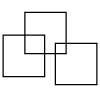
Three Squares

What is the greatest number of squares you can make by overlapping three squares?

Two Dice

Find all the numbers that can be made by adding the dots on two dice.

Biscuit Decorations

Andrew decorated 20 biscuits to take to a party. He lined them up and put icing on every second biscuit and different decorations on other biscuits. How many biscuits weren't decorated?

  • Tech help
  • Accessibility Statement
  • Sign up to our newsletter
  • Twitter X logo

The NRICH Project aims to enrich the mathematical experiences of all learners. To support this aim, members of the NRICH team work in a wide range of capacities, including providing professional development for teachers wishing to embed rich mathematical tasks into everyday classroom practice.

NRICH is part of the family of activities in the Millennium Mathematics Project.

University of Cambridge logo NRICH logo