Skip over navigation


We may well find ourselves saying to children "Be systematic!", or words to that effect.
However, we cannot expect learners to work systematically without articulating what it means and why it is such an important mathematical skill.
What does it mean to 'work systematically'?
In the context of problem solving, we could think about working systematically as working in a methodical and efficient way which could clearly show others that we are using a pattern or system.
Where do we start?
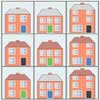 Encouraging very young children to play with sets of objects or cards and to find ways to sort them is a very useful starting point. The Early Years Foundation Stage activities 'Collecting' and 'Packing', found here, set the seeds for this. In Sort the Street, pictures of houses provide the stimulus and learners are challenged to sort them in as many ways as possible. In order to do this, they have to identify as many attributes as they can and recognise what is the same and what is different when making comparisons.
When asked to find all possibilities, rather than working on something they have been given (as is the case with sorting activities), children are required to generate something new. At first they are likely to do this in a random way. If you help them to sort their randomly-generated possibilities, then they can see which ones are missing. This helps children understand what working systematically means so they can begin to generate systematically too. In this way, sorting activities are very valuable in laying the foundations for systematic approaches.
When is being able to work systematically useful?
Finding all possibilities
A good place to start with children is problems which entail finding all possibilities. These are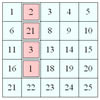 an ideal context in which they can become fluent with the skill. In this type of problem, having a system ensures that you don't leave any options out. There are many of this type of activity on NRICH,
for example Three Ball Line Up, A City of Towers and Two Dice at lower primary and Sealed Solution, Factor Lines and Reach 100 at upper primary. You could try three of these in succession with your class so, having worked on one, they have the opportunity to apply the
approach in two new contexts soon afterwards.
an ideal context in which they can become fluent with the skill. In this type of problem, having a system ensures that you don't leave any options out. There are many of this type of activity on NRICH,
for example Three Ball Line Up, A City of Towers and Two Dice at lower primary and Sealed Solution, Factor Lines and Reach 100 at upper primary. You could try three of these in succession with your class so, having worked on one, they have the opportunity to apply the
approach in two new contexts soon afterwards.
It is then useful to show children how they can use the skill to help them solve other types of problems.
Ordered Ways of Working
i) Structuring a method for solving a problem
Systematic working is a useful tool for tackling many other kinds of problem. For example in Growing Garlic, a challenging lower primary activity, trying out possible answers in a methodical way gives you insight into the situation and reveals patterns which could ultimately lead to a full solution.
ii) Working in an order to reach the solution
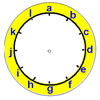 A Mixed-up Clock is a logic problem that involves using the information provided to work out where the numbers are on the clock face. In this case, you can only reach the solution by using the clues in a particular order and it is this ordering that constitutes a systematic approach.
One of Thirty Six and What Do You Need? are also examples of this type of task.
A Mixed-up Clock is a logic problem that involves using the information provided to work out where the numbers are on the clock face. In this case, you can only reach the solution by using the clues in a particular order and it is this ordering that constitutes a systematic approach.
One of Thirty Six and What Do You Need? are also examples of this type of task.
Going further
For activities which provoke systematic working at secondary level, see the Developing Systematic Approaches feature.
In summary
This article has hopefully helped you to think about how to structure the experiences that you could give children to support them in developing the important mathematical skill of working systematically. If they start young and have 'themed' experiences, as suggested above, then they will be more confident at applying this approach.
This article was published as part of the Working Systematically feature.
There are many more NRICH activities that offer opportunities for you and the children to work systematically. You can find them in our Working Systematically collections. Enjoy.
Here is a PDF version of this article.

Encouraging Primary Children to Work Systematically
We may well find ourselves saying to children "Be systematic!", or words to that effect.
However, we cannot expect learners to work systematically without articulating what it means and why it is such an important mathematical skill.
What does it mean to 'work systematically'?
In the context of problem solving, we could think about working systematically as working in a methodical and efficient way which could clearly show others that we are using a pattern or system.
Where do we start?
Encouraging very young children to play with sets of objects or cards and to find ways to sort them is a very useful starting point. The Early Years Foundation Stage activities 'Collecting' and 'Packing', found here, set the seeds for this. In Sort the Street, pictures of houses provide the stimulus and learners are challenged to sort them in as many ways as possible. In order to do this, they have to identify as many attributes as they can and recognise what is the same and what is different when making comparisons. When asked to find all possibilities, rather than working on something they have been given (as is the case with sorting activities), children are required to generate something new. At first they are likely to do this in a random way. If you help them to sort their randomly-generated possibilities, then they can see which ones are missing. This helps children understand what working systematically means so they can begin to generate systematically too. In this way, sorting activities are very valuable in laying the foundations for systematic approaches.
When is being able to work systematically useful?
Finding all possibilities
A good place to start with children is problems which entail finding all possibilities. These are
an ideal context in which they can become fluent with the skill. In this type of problem, having a system ensures that you don't leave any options out. There are many of this type of activity on NRICH,
for example Three Ball Line Up, A City of Towers and Two Dice at lower primary and Sealed Solution, Factor Lines and Reach 100 at upper primary. You could try three of these in succession with your class so, having worked on one, they have the opportunity to apply the
approach in two new contexts soon afterwards. It is then useful to show children how they can use the skill to help them solve other types of problems.
Ordered Ways of Working
i) Structuring a method for solving a problem
Systematic working is a useful tool for tackling many other kinds of problem. For example in Growing Garlic, a challenging lower primary activity, trying out possible answers in a methodical way gives you insight into the situation and reveals patterns which could ultimately lead to a full solution.
ii) Working in an order to reach the solution
A Mixed-up Clock is a logic problem that involves using the information provided to work out where the numbers are on the clock face. In this case, you can only reach the solution by using the clues in a particular order and it is this ordering that constitutes a systematic approach.
One of Thirty Six and What Do You Need? are also examples of this type of task.Going further
For activities which provoke systematic working at secondary level, see the Developing Systematic Approaches feature.
In summary
This article has hopefully helped you to think about how to structure the experiences that you could give children to support them in developing the important mathematical skill of working systematically. If they start young and have 'themed' experiences, as suggested above, then they will be more confident at applying this approach.
This article was published as part of the Working Systematically feature.
There are many more NRICH activities that offer opportunities for you and the children to work systematically. You can find them in our Working Systematically collections. Enjoy.
Here is a PDF version of this article.
You may also like
Dienes' Logiblocs
This problem focuses on Dienes' Logiblocs. What is the same and what is different about these pairs of shapes? Can you describe the shapes in the picture?