
Skip over navigation
Cambridge University Faculty of Mathematics NRich logo
menu search
  • Teachers expand_more
    • Early years
    • Primary
    • Secondary
    • Post-16
    • Events
    • Professional development
  • Students expand_more
    • Primary
    • Secondary
    • Post-16
  • Parents expand_more
    • Early Years
    • Primary
    • Secondary
    • Post-16
  • Problem-Solving Schools
  • About NRICH expand_more
    • About us
    • Impact stories
    • Support us
    • Our funders
    • Contact us
  • search

Or search by topic

Number and algebra

  • The Number System and Place Value
  • Calculations and Numerical Methods
  • Fractions, Decimals, Percentages, Ratio and Proportion
  • Properties of Numbers
  • Patterns, Sequences and Structure
  • Algebraic expressions, equations and formulae
  • Coordinates, Functions and Graphs

Geometry and measure

  • Angles, Polygons, and Geometrical Proof
  • 3D Geometry, Shape and Space
  • Measuring and calculating with units
  • Transformations and constructions
  • Pythagoras and Trigonometry
  • Vectors and Matrices

Probability and statistics

  • Handling, Processing and Representing Data
  • Probability

Working mathematically

  • Thinking mathematically
  • Developing positive attitudes
  • Cross-curricular contexts

Advanced mathematics

  • Decision Mathematics and Combinatorics
  • Advanced Probability and Statistics
  • Mechanics
  • Calculus

For younger learners

  • Early Years Foundation Stage

Least of All

Age 16 to 18
Challenge Level Yellow star
  • Problem
  • Getting Started
  • Student Solutions
  • Teachers' Resources


A point $X$ moves on the line segment $PQ$ of length $2a$ where $XP=a+x$, $XQ=a-x$ and $-a\leq x \leq a$, as in the following diagram:Diagram showing position of X between -a and a, so PX is x+a and XQ is a-x
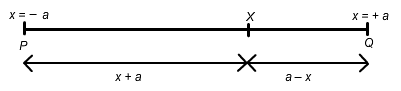
You are interested in finding the minimum value of the function $f(x)=(1 + XP^2)(1 + XQ^2)$. Without writing anything down can you suggest where the location of X that gives the minimum value(s) of $f(x)$ will be? Do you think that this will depend on the value of $a$? Once you have considered the matter, write your thoughts down as a clear, precise conjecture.


Check your conjecture using calculus to find the minimum values. Was this as expected?


Given your insights, can you suggest possible locations for the minimum values of $g(x) = (1+ XP^4)(1+XQ^4)$?


NOTES AND BACKGROUND

Conjectures are speculations which people try to prove or disprove. Some mathematical conjectures are so difficult to prove that many mathematicians, over a hundred years or more, have tried and failed to prove them. There is prize money and worldwide fame for anyone who can prove one of these famous conjectures such as The Reimann Conjecture. This is also called the Reimann Hypothesis which leads to the question "Is a conjecture the same as a hypothesis?"

The answer is, strictly speaking, no. The word hypothesis is used in pure mathematics to mean one of the conditions in a theorem, for example 'If a triangle is right-angled" is a hypothesis in Pythagoras' Theorem. A very different meaning for the word hypothesis , which is used in statistics, is a speculation which is reinforced or refuted by the acquisition of new information. Such hypotheses are not proved logically true or false but merely considered, in the light of evidence, to be more likely or unlikely to be true.


You may also like

Folium of Descartes

Investigate the family of graphs given by the equation x^3+y^3=3axy for different values of the constant a.

Witch of Agnesi

Sketch the members of the family of graphs given by y = a^3/(x^2+a^2) for a=1, 2 and 3.
Discrete Trends

Find the maximum value of n to the power 1/n and prove that it is a maximum.

  • Tech help
  • Accessibility Statement
  • Sign up to our newsletter
  • Twitter X logo

The NRICH Project aims to enrich the mathematical experiences of all learners. To support this aim, members of the NRICH team work in a wide range of capacities, including providing professional development for teachers wishing to embed rich mathematical tasks into everyday classroom practice.

NRICH is part of the family of activities in the Millennium Mathematics Project.

University of Cambridge logo NRICH logo