Skip over navigation


Pour 2$^{ère}$ cycle de l'élémentaire
Mise en situation
Voici 3 chaudières : une rouge, une bleue et une jaune. Chacune de ces chaudières peut contenir un maximum de 5 litres de liquide.
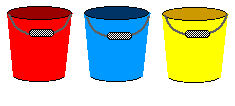
On verse une quantité différente de liquide dans chaque chaudière. Le liquide est mesuré avec exactitude en litres entiers.
Si on versait le liquide de la chaudière rouge dans la chaudière bleue, celui-ci contiendrait la même quantité de liquide que la chaudière jaune.
La moitié du liquide de la chaudière jaune est égale à deux fois la quantité de liquide de la chaudière rouge.
Question
Combien de liquide y a-t-il dans chacune des chaudières?
Source: Buckets of Thinking
Translated by Renée Michaud, Coordonnatrice et consultante de mathématiques et sciences, Consortium provincial francophone pour le perfectionnement professionnel, Calgary, Canada
Question De Chaudières
Age 7 to 11
Challenge Level 

Pour 2$^{ère}$ cycle de l'élémentaire
Mise en situation
Voici 3 chaudières : une rouge, une bleue et une jaune. Chacune de ces chaudières peut contenir un maximum de 5 litres de liquide.
On verse une quantité différente de liquide dans chaque chaudière. Le liquide est mesuré avec exactitude en litres entiers.
Si on versait le liquide de la chaudière rouge dans la chaudière bleue, celui-ci contiendrait la même quantité de liquide que la chaudière jaune.
La moitié du liquide de la chaudière jaune est égale à deux fois la quantité de liquide de la chaudière rouge.
Question
Combien de liquide y a-t-il dans chacune des chaudières?
Source: Buckets of Thinking
Translated by Renée Michaud, Coordonnatrice et consultante de mathématiques et sciences, Consortium provincial francophone pour le perfectionnement professionnel, Calgary, Canada