Skip over navigation
Cambridge University Faculty of Mathematics NRich logo
menu search
  • Teachers expand_more
    • Early years
    • Primary
    • Secondary
    • Post-16
    • Events
    • Professional development
  • Students expand_more
    • Primary
    • Secondary
    • Post-16
  • Parents expand_more
    • Early Years
    • Primary
    • Secondary
    • Post-16
  • Problem-Solving Schools
  • About NRICH expand_more
    • About us
    • Impact stories
    • Support us
    • Our funders
    • Contact us
  • search

Or search by topic

Number and algebra

  • The Number System and Place Value
  • Calculations and Numerical Methods
  • Fractions, Decimals, Percentages, Ratio and Proportion
  • Properties of Numbers
  • Patterns, Sequences and Structure
  • Algebraic expressions, equations and formulae
  • Coordinates, Functions and Graphs

Geometry and measure

  • Angles, Polygons, and Geometrical Proof
  • 3D Geometry, Shape and Space
  • Measuring and calculating with units
  • Transformations and constructions
  • Pythagoras and Trigonometry
  • Vectors and Matrices

Probability and statistics

  • Handling, Processing and Representing Data
  • Probability

Working mathematically

  • Thinking mathematically
  • Developing positive attitudes
  • Cross-curricular contexts

Advanced mathematics

  • Decision Mathematics and Combinatorics
  • Advanced Probability and Statistics
  • Mechanics
  • Calculus

For younger learners

  • Early Years Foundation Stage

The Big Cheese

Age 7 to 11
Challenge Level Yellow star
  • Problem
  • Getting Started
  • Student Solutions
  • Teachers' Resources

The Big Cheese


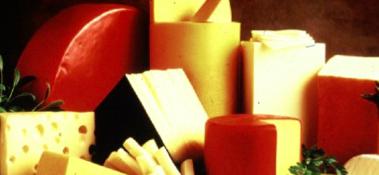
I met up with some friends yesterday for lunch. On the table was a good big block of cheese. It looked rather like a cube. As the meal went on we started cutting off slices, but these got smaller and smaller! It got me thinking ...

What if the cheese cube was $5$ by $5$ by $5$ and each slice was always $1$ thick?

It wouldn't be fair on everyone else's lunch if I cut up the real cheese so I made a model out of multilink cubes:

You could of course, just make $5$ slices but I wanted to have a go at something else - keeping what is left as close to being a cube as possible.

You can see that it's a $5$ by $5$ by $5$ because of the individual cubes, so the slices will have to be $1$ cube thick.

So let's take a slice off the right hand side, I've coloured it in so you can see which bit I'm talking about:

  This now gets cut off and we have:   
 

The next slice will be from the left hand side (shown in a different colour again):

Wel the knife cuts and we are left with: 
 

Remember I'm setting myself the task of cutting so that I am left with a shape as close to a cube shape as possible each time.

So the next cut is from the top. Hard to cut this so I would have put it on its side!

I'll remove that and I'm left with the $4$ by $4$ by $4$ cube


I do three more cuts to get to the $3$ by $3$ by $3$ and these leave the block like this:

 
I'm sure you've got the idea now so I don't need to talk as much about what I did:
  and then onto:

That leaves you with two of the smallest size cube $1$ by $1$ by $1$.

If we keep all the slices and the last little cube, we will have pieces that look like (seen from above):

C H A L L E N G E

Now we have thirteen objects to explore.
  • What about the areas of these as seen from above?
  • What about the total surface areas of these?
  • What about their volumes of the pieces?

A L S O

Investigate sharing these thirteen pieces out so that everyone gets an equal share.


What about ...?

I guess that once you've explored the pattern of numbers you'll be able to extend it as if you had started with a $10$ by $10$ by $10$ cube of cheese.


Why do this problem?

This activity is a rich environment in which children can explore numbers, shapes and/or measures. It therefore has the potential to involve a lot of visualisation and calculation, and to stimulate lively discussion.

Possible approach

It would be helpful to introduce this activity using a model of the cheese, for example made out of multilink cubes. As you tell the story and explain how you're going to cut the cheese, ask learners to picture what the cheese will look like once the cut has been made. Invite some of them to describe the resulting block, before demonstrating what it looks like with the model itself. You might like to ask the group to try the last few cuts for themselves in pairs rather than going through them all as a whole class.

Once all the cuts have been made, you could have models of the pieces from multilink, or you could have images of the pieces on the board. Before saying much else, ask children what they notice. This will bring up many interesting observations, some of which the children may wish to pursue, or you can make suggestions based on the text of the problem itself.

Allow children to choose the materials they need to work on their investigation. Some may be happy to visualise the cutting, others may need to use suitable materials like multilink or plasticene. All of them are likely to want to write and/or draw at some stage.

This activity lends itself to a 'messy maths wall' - a place where learners can contribute findings over an extended period. You can then plan to look together at everyone's work and talk about what they have explored.

If you are handy with materials you could have made all the thirteen cuboids and stuck them together with some tacky material beforehand.


Key questions

Tell me about the shapes that you've got.
Tell me about what you're doing.
Which is the biggest piece? How do you know?

Possible extension

Some learners could investigate what happens when the starting piece is a larger size. Encourage them to ask questions of their own: "I wonder what would happen if ...?"
 

For more extension work

This pupil could be presented with the same idea as using a $5$ by $5$ by $5$ piece of cheese but consider using a knife to carefully cut cubes from it.  I would set the challenge to find all the different ways of cutting cubes (with as little waste as possible) from it. For example you can obviously cut $125$ cubes of size $1$ - so that's one way. Can you cut it to produce some other size as well as $1$'s? So, how many ways altogether?

Possible support

Having cubes available will help pupils to make a start on this challenge, although some may need help from adults or peers when dismantling the cubes as they make the 'cuts'.

You may also like

Cubes

How many faces can you see when you arrange these three cubes in different ways?

Wrapping Presents

Choose a box and work out the smallest rectangle of paper needed to wrap it so that it is completely covered.
Cubic Conundrum

Which of the following cubes can be made from these nets?

  • Tech help
  • Accessibility Statement
  • Sign up to our newsletter
  • Twitter X logo

The NRICH Project aims to enrich the mathematical experiences of all learners. To support this aim, members of the NRICH team work in a wide range of capacities, including providing professional development for teachers wishing to embed rich mathematical tasks into everyday classroom practice.

NRICH is part of the family of activities in the Millennium Mathematics Project.

University of Cambridge logo NRICH logo