Skip over navigation

Cambridge University Faculty of Mathematics NRich logo
menu search
  • Teachers expand_more
    • Early years
    • Primary
    • Secondary
    • Post-16
    • Events
    • Professional development
  • Students expand_more
    • Primary
    • Secondary
    • Post-16
  • Parents expand_more
    • Early Years
    • Primary
    • Secondary
    • Post-16
  • Problem-Solving Schools
  • About NRICH expand_more
    • About us
    • Impact stories
    • Support us
    • Our funders
    • Contact us
  • search

Or search by topic

Number and algebra

  • The Number System and Place Value
  • Calculations and Numerical Methods
  • Fractions, Decimals, Percentages, Ratio and Proportion
  • Properties of Numbers
  • Patterns, Sequences and Structure
  • Algebraic expressions, equations and formulae
  • Coordinates, Functions and Graphs

Geometry and measure

  • Angles, Polygons, and Geometrical Proof
  • 3D Geometry, Shape and Space
  • Measuring and calculating with units
  • Transformations and constructions
  • Pythagoras and Trigonometry
  • Vectors and Matrices

Probability and statistics

  • Handling, Processing and Representing Data
  • Probability

Working mathematically

  • Thinking mathematically
  • Developing positive attitudes
  • Cross-curricular contexts

Advanced mathematics

  • Decision Mathematics and Combinatorics
  • Advanced Probability and Statistics
  • Mechanics
  • Calculus

For younger learners

  • Early Years Foundation Stage

Calculus Countdown

Age 16 to 18
Challenge Level Yellow star
  • Problem
  • Getting Started
  • Student Solutions
  • Teachers' Resources

Why do this problem?

This problem gives a great engaging context in which to practise calculus. It is very useful for getting across important ideas concerning integration and differentiation as operations, which will be useful at university in both science and maths courses.

Possible approach

Initially play as a straightforward game to try to hit the targets.

Students could then try to create new targets for their friends to try to hit using the same initial functions.

You could then give the students the task of creating their own game of Calculus Countdown.

Once students have hit a target they will need to communicate their answers clearly. How might they write down an answer in a clear and unambiguous way that can easily be interpreted by someone else?

Key questions

What happens when you integrate or differentiate the starting functions?
What would you have to integrate or differentiate in one step to hit the targets? Does this help?

Possible extension

Interesting side questions which might emerge are: What targets are possible? Can you prove that certain targets (such as $\sqrt{x}$ or $3$) are impossible to hit? Clearly, proving the impossibility of a target will require some clear thinking; be sure that students concentrate on clearly writing down their arguments.

Possible support

Focus on the first 3 targets.

You may also like

Generally Geometric

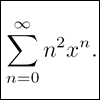
Generalise the sum of a GP by using derivatives to make the coefficients into powers of the natural numbers.

Bend

What is the longest stick that can be carried horizontally along a narrow corridor and around a right-angled bend?

Exponential Trend

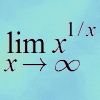
Find all the turning points of y=x^{1/x} for x>0 and decide whether each is a maximum or minimum. Give a sketch of the graph.

  • Tech help
  • Accessibility Statement
  • Sign up to our newsletter
  • Twitter X logo

The NRICH Project aims to enrich the mathematical experiences of all learners. To support this aim, members of the NRICH team work in a wide range of capacities, including providing professional development for teachers wishing to embed rich mathematical tasks into everyday classroom practice.

NRICH is part of the family of activities in the Millennium Mathematics Project.

University of Cambridge logo NRICH logo