Skip over navigation


Pour 1$^{ère}$ cycle du secondaire
Situation 1
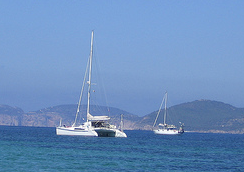
Sur un lac, on retrouve deux bateaux qui voyagent d'un bout à l'autre à une vitesse constante. Lorsqu'un bateau arrive à une extrémité, il tourne sans changer de vitesse. Les bateaux partent à des extrémités opposées du lac.
Partie A
Si les bateaux voyagent à la même vitesse, où se rencontreront-ils la première fois? La deuxième fois? La troisième fois?
Partie B
Quels seraient les points de rencontre si un des bateaux voyageaient deux fois plus vite que l'autre?
Partie C
Quels seraient les points de rencontre si un des bateaux voyageaient trois fois plus vite que l'autre?
Situation 2
Les bateaux partent aux extrémités opposées du lac au même instant. - La première rencontre est à 600 m du point de départ A. - Les bateaux reviennent sur le pas et se rencontrent pour la deuxième fois à 400 m du point de départ B. Trouve la longueur du lac et le rapport de vitesse des deux bateaux.
Extension
Explore les rapports de vitesse et la longueur du lac quand tu changes les distances de la situation 2. Peut-on tirer une règle générale?
Source: Speeding Boats
Translated by Renée Michaud, Coordonnatrice et consultante de mathématiques et sciences, Consortium provincial francophone pour le perfectionnement professionnel, Calgary, Canada
Bateaux Sur Lac
Age 14 to 16
Challenge Level 

Pour 1$^{ère}$ cycle du secondaire
Situation 1
Sur un lac, on retrouve deux bateaux qui voyagent d'un bout à l'autre à une vitesse constante. Lorsqu'un bateau arrive à une extrémité, il tourne sans changer de vitesse. Les bateaux partent à des extrémités opposées du lac.
Partie A
Si les bateaux voyagent à la même vitesse, où se rencontreront-ils la première fois? La deuxième fois? La troisième fois?
Partie B
Quels seraient les points de rencontre si un des bateaux voyageaient deux fois plus vite que l'autre?
Partie C
Quels seraient les points de rencontre si un des bateaux voyageaient trois fois plus vite que l'autre?
Situation 2
Les bateaux partent aux extrémités opposées du lac au même instant. - La première rencontre est à 600 m du point de départ A. - Les bateaux reviennent sur le pas et se rencontrent pour la deuxième fois à 400 m du point de départ B. Trouve la longueur du lac et le rapport de vitesse des deux bateaux.
Extension
Explore les rapports de vitesse et la longueur du lac quand tu changes les distances de la situation 2. Peut-on tirer une règle générale?
Source: Speeding Boats
Translated by Renée Michaud, Coordonnatrice et consultante de mathématiques et sciences, Consortium provincial francophone pour le perfectionnement professionnel, Calgary, Canada