Skip over navigation


bioNRICH
Age 14 to 18
Challenge Level 

| stemNRICH : Science, Technology, Engineering, Mathematics enriched | |||||
 |
 |
 |
 |
 |
 |
Welcome to bioNRICH: the biology section of stemNRICH. This contains mathematical activities for students aged 14 - 19 designed to complement and enhance the study of biology.
| Area of biological Maths | Style | Question | Description |
|---|---|---|---|
| Basic maths in biology |  |
Big and Small Numbers in Biology | 10 individual questions using numbers big and small to calculate or estimate various quantities in simple biological contexts. |
| Measurement and estimation |  |
Bird-brained | Estimate how many eggs a bird should lay to maximise the number of chicks that will hatch in this introduction to optimisation. |
| Graphs and equations |  |
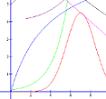
What biological processes might fit onto these graphs? What units and axes would be relevant? What functions would describe the graphs? | |
|
Drug Stabiliser |
How does the half-life of a drug affect the build up of medication in the body over time?
|
|
| Statistics in biology | |||
|
Very Old Man | Is it likely someone could have lived to 200 years old? Use statistics to investigate. | |
|
Chi-squared Faker | How could you massage this $\chi^2$-squared test to reject the hypothesis? | |
| Moles and molarity | See also the Moles and Molarity section on the chemNRICH pages | ||
 |
Mixed Up Mixture | A standard calibration for a spectrophotometric assay for lysozyme was performed and the data tabulated. The data have become mixed up. Can you reassemble it using the interactive card sorter? | |
| Dilutions | See also the Dilutions section on the chemNRICH pages | ||
|
Ratios and Dilutions | Scientists often require solutions which are diluted to a particular concentration. In this problem, you can explore the mathematics of simple dilutions. | |
| DNA and Genetics |  |
The Genes of Gilgamesh | Is it possible to create a genetic stock of the type that the hero Gilgamesh was said to possess? |
|
Why Multiply When You're about to Divide? | The Polymerase Chain Reaction is a technique used to amplify the amount of DNA in a sample. Find out how it works here. | |
|
Is Your DNA Unique? | Use combinatorics to analyse the liklihood of someone sharing your DNA. | |
| Shapes | |
Fitting Flat Shapes | Develop your understanding of area by visualising the best way in which you can pack various shapes together most efficiently. Does Nature pack shapes efficiently? |
|
Packing 3D Shapes | Can you visualise or sketch the packing of the sorts of 3D shapes which occur in nature? | |
| Advanced mathematics in biology | |
Use differential equations to model the evolution of a system of carnivorous predators and their vegetarian prey. | |
|
Prepare for university | Get yourself ready for university with these questions and guidance on mathematical biology. | |
| Articles | |
Genetic Intrigue | Read this introduction to core topics in genetics. |
You may also like
Catalyse That!
Can you work out how to produce the right amount of chemical in a temperature-dependent reaction?