Skip over navigation
Cambridge University Faculty of Mathematics NRich logo
menu search
  • Teachers expand_more
    • Early years
    • Primary
    • Secondary
    • Post-16
    • Events
    • Professional development
  • Students expand_more
    • Primary
    • Secondary
    • Post-16
  • Parents expand_more
    • Early Years
    • Primary
    • Secondary
    • Post-16
  • Problem-Solving Schools
  • About NRICH expand_more
    • About us
    • Impact stories
    • Support us
    • Our funders
    • Contact us
  • search

Or search by topic

Number and algebra

  • The Number System and Place Value
  • Calculations and Numerical Methods
  • Fractions, Decimals, Percentages, Ratio and Proportion
  • Properties of Numbers
  • Patterns, Sequences and Structure
  • Algebraic expressions, equations and formulae
  • Coordinates, Functions and Graphs

Geometry and measure

  • Angles, Polygons, and Geometrical Proof
  • 3D Geometry, Shape and Space
  • Measuring and calculating with units
  • Transformations and constructions
  • Pythagoras and Trigonometry
  • Vectors and Matrices

Probability and statistics

  • Handling, Processing and Representing Data
  • Probability

Working mathematically

  • Thinking mathematically
  • Developing positive attitudes
  • Cross-curricular contexts

Advanced mathematics

  • Decision Mathematics and Combinatorics
  • Advanced Probability and Statistics
  • Mechanics
  • Calculus

For younger learners

  • Early Years Foundation Stage
NRICH topics: Place value and the number system Comparing and ordering numbers

Resources tagged with: Comparing and ordering numbers

Content type:
Age range:
Challenge level:

There are 76 NRICH Mathematical resources connected to Comparing and ordering numbers, you may find related items under Place value and the number system.

Broad Topics > Place value and the number system > Comparing and ordering numbers

Problem Primary curriculum Secondary curriculum

Number Lines in Disguise

Some of the numbers have fallen off Becky's number line. Can you figure out what they were?

Age 7 to 14
Challenge Level Yellow starYellow star
Problem Primary curriculum Secondary curriculum

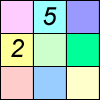
Carroll Diagrams

Use the interactivities to fill in these Carroll diagrams. How do you know where to place the numbers?

Age 5 to 11
Challenge Level Yellow star
Problem Primary curriculum Secondary curriculum

Greater Than or Less Than?

Use the numbers and symbols to make this number sentence correct. How many different ways can you find?

Age 7 to 11
Challenge Level Yellow star
Problem Primary curriculum Secondary curriculum

Can You Do it Too?

Try some throwing activities and see whether you can throw something as far as the Olympic hammer or discus throwers.

Age 5 to 7
Challenge Level Yellow star
Problem Primary curriculum Secondary curriculum

Now and Then

Look at the changes in results on some of the athletics track events at the Olympic Games in 1908 and 1948. Compare the results for 2012.

Age 7 to 11
Challenge Level Yellow starYellow star
Problem Primary curriculum Secondary curriculum

Olympic Starters

Look at some of the results from the Olympic Games in the past. How do you compare if you try some similar activities?
Age 7 to 11
Challenge Level Yellow star
Problem Primary curriculum Secondary curriculum

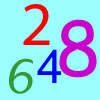
Ordering Cards

This problem is designed to help children to learn, and to use, the two and three times tables.
Age 5 to 11
Challenge Level Yellow star
Problem Live Primary curriculum Secondary curriculum

Largest Even

How would you create the largest possible two-digit even number from the digit I've given you and one of your choice?

Age 5 to 11
Challenge Level Yellow star
Problem Primary curriculum Secondary curriculum

Light the Lights

Investigate which numbers make these lights come on. What is the smallest number you can find that lights up all the lights?

Age 5 to 7
Challenge Level Yellow starYellow star
Problem Primary curriculum Secondary curriculum

I Like ...

Mr Gilderdale is playing a game with his class. What rule might he have chosen? How would you test your idea?

Age 5 to 7
Challenge Level Yellow star
Game Primary curriculum Secondary curriculum

Dicey Operations

Who said that adding, subtracting, multiplying and dividing couldn't be fun?

Age 11 to 14
Challenge Level Yellow star
Problem Primary curriculum Secondary curriculum

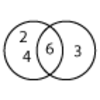
Nice or Nasty

There are nasty versions of this dice game but we'll start with the nice ones...
Age 7 to 14
Challenge Level Yellow star
Problem Primary curriculum Secondary curriculum

Venn Diagrams

How will you complete these interactive Venn diagrams?

Age 5 to 11
Challenge Level Yellow star
Problem Primary curriculum Secondary curriculum

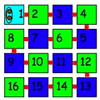
Difference Sudoku

Use the differences to find the solution to this Sudoku.
Age 14 to 16
Challenge Level Yellow starYellow starYellow star
Problem Primary curriculum Secondary curriculum

Caterpillars

These caterpillars have 16 parts. What different shapes do they make if each part lies in the small squares of a 4 by 4 square?
Age 5 to 7
Challenge Level Yellow starYellow star
Problem Primary curriculum Secondary curriculum

Factor-multiple Chains

Can you see how these factor-multiple chains work? Find the chain which contains the smallest possible numbers. How about the largest possible numbers?
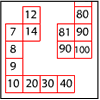
Age 7 to 11
Challenge Level Yellow starYellow star
Problem Primary curriculum Secondary curriculum

Multiplication Square Jigsaw

Can you complete this jigsaw of the multiplication square?
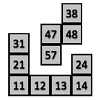
Age 7 to 11
Challenge Level Yellow star
Problem Primary curriculum Secondary curriculum

100 Square Jigsaw

Can you complete this jigsaw of the 100 square?

Age 5 to 7
Challenge Level Yellow star
Problem Primary curriculum Secondary curriculum

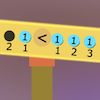
Number Balance

Can you hang weights in the right place to make the the number balance balanced?
Age 5 to 7
Challenge Level Yellow star
Problem Primary curriculum Secondary curriculum

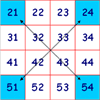
Diagonal Sums

In this 100 square, look at the green square which contains the numbers 2, 3, 12 and 13. What is the sum of the numbers that are diagonally opposite each other? What do you notice?
Age 7 to 14
Challenge Level Yellow starYellow star
Problem Primary curriculum Secondary curriculum

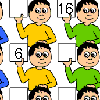
Carrying Cards

These sixteen children are standing in four lines of four, one behind the other. They are each holding a card with a number on it. Can you work out the missing numbers?

Age 7 to 11
Challenge Level Yellow star
Problem Primary curriculum Secondary curriculum

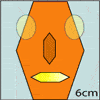
Consecutive Seven

Can you arrange these numbers into 7 subsets, each of three numbers, so that when the numbers in each are added together, they make seven consecutive numbers?
Age 11 to 14
Challenge Level Yellow star
Problem Primary curriculum Secondary curriculum

Robot Monsters

Use these head, body and leg pieces to make Robot Monsters which are different heights.

Age 5 to 7
Challenge Level Yellow star
Problem Primary curriculum Secondary curriculum

The Tall Tower

As you come down the ladders of the Tall Tower you collect useful spells. Which way should you go to collect the most spells?

Age 5 to 7
Challenge Level Yellow starYellow starYellow star
Problem Primary curriculum Secondary curriculum

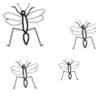
Farey Sequences

There are lots of ideas to explore in these sequences of ordered fractions.
Age 11 to 14
Challenge Level Yellow starYellow star
Problem Primary curriculum Secondary curriculum

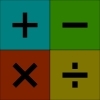
Would You Rather?

Would you rather: Have 10% of £5 or 75% of 80p? Be given 60% of 2 pizzas or 26% of 5 pizzas?
Age 7 to 11
Challenge Level Yellow star
Problem Primary curriculum Secondary curriculum

Highest and Lowest

Put operations signs between the numbers 3 4 5 6 to make the highest possible number and lowest possible number.

Age 7 to 11
Challenge Level Yellow star
Problem Primary curriculum Secondary curriculum

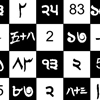
Mathland Election

A political commentator summed up an election result. Given that there were just four candidates and that the figures quoted were exact find the number of votes polled for each candidate.
Age 11 to 14
Challenge Level Yellow starYellow star
Problem Primary curriculum Secondary curriculum

Which Scripts?

There are six numbers written in five different scripts. Can you sort out which is which?

Age 7 to 11
Challenge Level Yellow star
Problem Primary curriculum Secondary curriculum

Giants

Which is the bigger, 9^10 or 10^9 ? Which is the bigger, 99^100 or 100^99 ?

Age 16 to 18
Challenge Level Yellow starYellow star
Problem Primary curriculum Secondary curriculum

Birthday Cakes

Jack's mum bought some candles to use on his birthday cakes and when his sister was born, she used them on her cakes too. Can you use the information to find out when Kate was born?
Age 5 to 7
Challenge Level Yellow starYellow star
Problem Primary curriculum Secondary curriculum

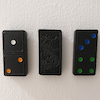
Missing Middles

Can you work out the domino pieces which would go in the middle in each case to complete the pattern of these eight sets of three dominoes?

Age 5 to 7
Challenge Level Yellow starYellow star
Problem Primary curriculum Secondary curriculum

Buzzy Bee

Buzzy Bee was building a honeycomb. She decorated the honeycomb with a pattern using numbers. Can you discover Buzzy's pattern and fill in the empty cells for her?

Age 5 to 7
Challenge Level Yellow star
Problem Primary curriculum Secondary curriculum

Rod Fractions

Pick two rods of different colours. Given an unlimited supply of rods of each of the two colours, how can we work out what fraction the shorter rod is of the longer one?

Age 7 to 14
Challenge Level Yellow star
Problem Primary curriculum Secondary curriculum

Sets of Four Numbers

There are ten children in Becky's group. Can you find a set of numbers for each of them? Are there any other sets?

Age 7 to 11
Challenge Level Yellow starYellow star
Problem Primary curriculum Secondary curriculum

Twizzle's Journey

Twizzle, a female giraffe, needs transporting to another zoo. Which route will give the fastest journey?
Age 5 to 7
Challenge Level Yellow starYellow starYellow star
Problem Primary curriculum Secondary curriculum

The Thousands Game

Each child in Class 3 took four numbers out of the bag. Who had made the highest even number?

Age 7 to 11
Challenge Level Yellow star
Article Primary curriculum Secondary curriculum

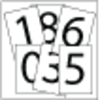
Calendar Activities

Don't get rid of your old calendars! You can get a lot more mathematical mileage out of them before they are thrown away. These activities, using cut up dates from the calendar, provide numbers to practise skills that may be in need of review after a holiday break.
Age 5 to 7
Article Primary curriculum Secondary curriculum

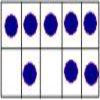
Number Sense Series: A Sense of 'ten' and Place Value

Once a basic number sense has developed for numbers up to ten, a strong 'sense of ten' needs to be developed as a foundation for both place value and mental calculations.

Age 5 to 7
Problem Primary curriculum Secondary curriculum

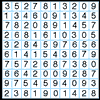
Here to There 1 2 3

Move from the START to the FINISH by moving across or down to the next square. Can you find a route to make these totals?
Age 5 to 7
Challenge Level Yellow starYellow starYellow star
Problem Primary curriculum Secondary curriculum

A Numbered Route

Can you draw a continuous line through 16 numbers on this grid so that the total of the numbers you pass through is as high as possible?

Age 7 to 11
Challenge Level Yellow starYellow star
Game Primary curriculum Secondary curriculum

Up and Down Donkey

A number card game for 2-6 players.

Age 5 to 11
Challenge Level Yellow star
Problem Primary curriculum Secondary curriculum

The Magic Number and the Hepta-tree

Find the exact difference between the largest ball and the smallest ball on the Hepta Tree and then use this to work out the MAGIC NUMBER!
Age 7 to 11
Challenge Level Yellow starYellow star
Problem Primary curriculum Secondary curriculum

Largest Number

What is the largest number you can make using the three digits 2, 3 and 4 in any way you like, using any operations you like? You can only use each digit once.

Age 11 to 14
Challenge Level Yellow star
Problem Primary curriculum Secondary curriculum

Euromaths

How many ways can you write the word EUROMATHS by starting at the top left hand corner and taking the next letter by stepping one step down or one step to the right in a 5x5 array?

Age 11 to 14
Challenge Level Yellow star
Problem Primary curriculum Secondary curriculum

Writ Large

Suppose you had to begin the never ending task of writing out the natural numbers: 1, 2, 3, 4, 5.... and so on. What would be the 1000th digit you would write down.

Age 11 to 14
Challenge Level Yellow starYellow star
Problem Primary curriculum Secondary curriculum

Rachel's Problem

Is it true that $99^n$ has 2n digits and $999^n$ has 3n digits? Investigate!

Age 14 to 16
Challenge Level Yellow starYellow starYellow star
Problem Primary curriculum Secondary curriculum

Greetings

From a group of any 4 students in a class of 30, each has exchanged Christmas cards with the other three. Show that some students have exchanged cards with all the other students in the class. How many such students are there?

Age 11 to 14
Challenge Level Yellow star
Problem Primary curriculum Secondary curriculum

Fair Exchange

In your bank, you have three types of coins. The number of spots shows how much they are worth. Can you choose coins to exchange with the groups given to make the same total?

Age 5 to 7
Challenge Level Yellow star
Problem Primary curriculum Secondary curriculum

Worms

Place this "worm" on the 100 square and find the total of the four squares it covers. Keeping its head in the same place, what other totals can you make?

Age 7 to 11
Challenge Level Yellow starYellow star

  • Tech help
  • Accessibility Statement
  • Sign up to our newsletter
  • Twitter X logo

The NRICH Project aims to enrich the mathematical experiences of all learners. To support this aim, members of the NRICH team work in a wide range of capacities, including providing professional development for teachers wishing to embed rich mathematical tasks into everyday classroom practice.

NRICH is part of the family of activities in the Millennium Mathematics Project.

University of Cambridge logo NRICH logo