Skip over navigation
Cambridge University Faculty of Mathematics NRich logo
menu search
  • Teachers expand_more
    • Early years
    • Primary
    • Secondary
    • Post-16
    • Events
    • Professional development
  • Students expand_more
    • Primary
    • Secondary
    • Post-16
  • Parents expand_more
    • Early Years
    • Primary
    • Secondary
    • Post-16
  • Problem-Solving Schools
  • About NRICH expand_more
    • About us
    • Impact stories
    • Support us
    • Our funders
    • Contact us
  • search

Or search by topic

Number and algebra

  • The Number System and Place Value
  • Calculations and Numerical Methods
  • Fractions, Decimals, Percentages, Ratio and Proportion
  • Properties of Numbers
  • Patterns, Sequences and Structure
  • Algebraic expressions, equations and formulae
  • Coordinates, Functions and Graphs

Geometry and measure

  • Angles, Polygons, and Geometrical Proof
  • 3D Geometry, Shape and Space
  • Measuring and calculating with units
  • Transformations and constructions
  • Pythagoras and Trigonometry
  • Vectors and Matrices

Probability and statistics

  • Handling, Processing and Representing Data
  • Probability

Working mathematically

  • Thinking mathematically
  • Developing positive attitudes
  • Cross-curricular contexts

Advanced mathematics

  • Decision Mathematics and Combinatorics
  • Advanced Probability and Statistics
  • Mechanics
  • Calculus

For younger learners

  • Early Years Foundation Stage
NRICH topics: Developing positive attitudes Being resourceful

Resources tagged with: Being resourceful

Content type:
Age range:
Challenge level:

There are 92 NRICH Mathematical resources connected to Being resourceful, you may find related items under Developing positive attitudes.

Broad Topics > Developing positive attitudes > Being resourceful

Problem Primary curriculum Secondary curriculum

First Connect Three

Add or subtract the two numbers on the spinners and try to complete a row of three. Are there some numbers that are good to aim for?

Age 7 to 11
Challenge Level Yellow star
Problem Primary curriculum Secondary curriculum

Difference Sudoku

Use the differences to find the solution to this Sudoku.
Age 14 to 16
Challenge Level Yellow starYellow starYellow star
Problem Primary curriculum Secondary curriculum

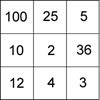
Shape Times Shape

These eleven shapes each stand for a different number. Can you use the number sentences to work out what they are?
Age 7 to 11
Challenge Level Yellow star
Problem Primary curriculum Secondary curriculum

Four Go

This challenge is a game for two players. Choose two of the numbers to multiply or divide, then mark your answer on the number line. Can you get four in a row?
Age 7 to 11
Challenge Level Yellow starYellow star
Problem Primary curriculum Secondary curriculum

A Chance to Win?

Imagine you were given the chance to win some money... and imagine you had nothing to lose...
Age 11 to 14
Challenge Level Yellow starYellow starYellow star
Problem Primary curriculum Secondary curriculum

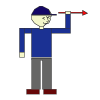
Turning Man

Use the interactivity to find out how many quarter turns the man must rotate through to look like each of the pictures.
Age 5 to 7
Challenge Level Yellow star
Game Primary curriculum Secondary curriculum

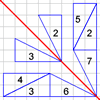
Transformation Game

Why not challenge a friend to play this transformation game?
Age 11 to 14
Challenge Level Yellow starYellow star
Problem Primary curriculum Secondary curriculum

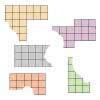
Wallpaper

These pieces of wallpaper need to be ordered from smallest to largest. Can you find a way to do it?
Age 5 to 7
Challenge Level Yellow starYellow star
Problem Primary curriculum Secondary curriculum

Torn Shapes

These rectangles have been torn. How many squares did each one have inside it before it was ripped?

Age 7 to 11
Challenge Level Yellow star
Problem Primary curriculum Secondary curriculum

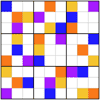
Substitution Cipher

Find the frequency distribution for ordinary English, and use it to help you crack the code.
Age 11 to 14
Challenge Level Yellow star
Problem Primary curriculum Secondary curriculum

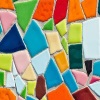
Product Sudoku

The clues for this Sudoku are the product of the numbers in adjacent squares.
Age 11 to 16
Challenge Level Yellow starYellow star
Problem Primary curriculum Secondary curriculum

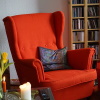
Semi-regular Tessellations

Semi-regular tessellations combine two or more different regular polygons to fill the plane. Can you find all the semi-regular tessellations?
Age 11 to 16
Challenge Level Yellow star
Problem Primary curriculum Secondary curriculum

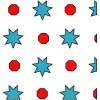
Cosy Corner

Six balls are shaken. You win if at least one red ball ends in a corner. What is the probability of winning?
Age 11 to 14
Challenge Level Yellow starYellow star
Problem Primary curriculum Secondary curriculum

Two's Company

Seven balls are shaken. You win if the two blue balls end up touching. What is the probability of winning?

Age 11 to 14
Challenge Level Yellow starYellow star
Problem Primary curriculum Secondary curriculum

Odds and Evens

Are these games fair? How can you tell?

Age 11 to 14
Challenge Level Yellow star
Problem Primary curriculum Secondary curriculum

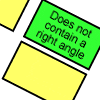
Property Chart

A game in which players take it in turns to try to draw quadrilaterals (or triangles) with particular properties. Is it possible to fill the game grid?
Age 11 to 14
Challenge Level Yellow starYellow star
Problem Primary curriculum Secondary curriculum

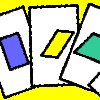
Shapely Pairs

A game in which players take it in turns to turn up two cards. If they can draw a triangle which satisfies both properties they win the pair of cards. And a few challenging questions to follow...
Age 11 to 14
Challenge Level Yellow starYellow star
Game Primary curriculum Secondary curriculum

Quadrilaterals Game

A game for 2 or more people, based on the traditional card game Rummy.
Age 11 to 14
Challenge Level Yellow star
Problem Primary curriculum Secondary curriculum

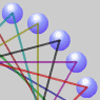
Arithmagons

Can you find the values at the vertices when you know the values on the edges?
Age 11 to 16
Challenge Level Yellow star
Problem Primary curriculum Secondary curriculum

Stars

Can you work out what step size to take to ensure you visit all the dots on the circle?
Age 11 to 14
Challenge Level Yellow starYellow star
Problem Primary curriculum Secondary curriculum

Isosceles Triangles

Draw some isosceles triangles with an area of $9$cm$^2$ and a vertex at (20,20). If all the vertices must have whole number coordinates, how many is it possible to draw?
Age 11 to 14
Challenge Level Yellow star
Problem Primary curriculum Secondary curriculum

Square It

Players take it in turns to choose a dot on the grid. The winner is the first to have four dots that can be joined to form a square.

Age 11 to 16
Challenge Level Yellow star
Problem Primary curriculum Secondary curriculum

On the Edge

If you move the tiles around, can you make squares with different coloured edges?

Age 11 to 14
Challenge Level Yellow starYellow star
Problem Primary curriculum Secondary curriculum

Cuboids

Can you find a cuboid that has a surface area of exactly 100 square units. Is there more than one? Can you find them all?
Age 11 to 14
Challenge Level Yellow starYellow starYellow star
Problem Primary curriculum Secondary curriculum

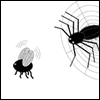
The Spider and the Fly

A spider is sitting in the middle of one of the smallest walls in a room and a fly is resting beside the window. What is the shortest distance the spider would have to crawl to catch the fly?

Age 14 to 16
Challenge Level Yellow starYellow star
Problem Primary curriculum Secondary curriculum

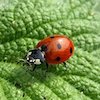
The Tall Tower

As you come down the ladders of the Tall Tower you collect useful spells. Which way should you go to collect the most spells?
Age 5 to 7
Challenge Level Yellow starYellow starYellow star
Problem Primary curriculum Secondary curriculum

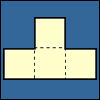
Ladybird Count

Some children were playing a game. Make a graph or picture to show how many ladybirds each child had.
Age 5 to 7
Challenge Level Yellow star
Problem Primary curriculum Secondary curriculum

Cut Nets

Each of the nets of nine solid shapes has been cut into two pieces. Can you see which pieces go together?

Age 7 to 11
Challenge Level Yellow starYellow star
Problem Primary curriculum Secondary curriculum

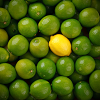
Sponge Sections

You have been given three shapes made out of sponge: a sphere, a cylinder and a cone. Your challenge is to find out how to cut them to make different shapes for printing.
Age 7 to 11
Challenge Level Yellow starYellow star
Problem Primary curriculum Secondary curriculum

Special Numbers

My two digit number is special because adding the sum of its digits to the product of its digits gives me my original number. What could my number be?

Age 11 to 14
Challenge Level Yellow star
Problem Primary curriculum Secondary curriculum

Eggs in Baskets

There are three baskets, a brown one, a red one and a pink one, holding a total of 10 eggs. How many eggs are in each basket?
Age 5 to 7
Challenge Level Yellow starYellow star
Problem Primary curriculum Secondary curriculum

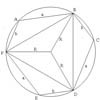
Hexy-metry

A hexagon, with sides alternately a and b units in length, is inscribed in a circle. How big is the radius of the circle?

Age 14 to 16
Challenge Level Yellow starYellow starYellow star
Problem Primary curriculum Secondary curriculum

Shady Symmetry

How many different symmetrical shapes can you make by shading triangles or squares?
Age 11 to 14
Challenge Level Yellow star
Problem Primary curriculum Secondary curriculum

Frogs

How many moves does it take to swap over some red and blue frogs? Do you have a method?

Age 11 to 14
Challenge Level Yellow star
Problem Primary curriculum Secondary curriculum

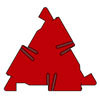
Sealed Solution

Ten cards are put into five envelopes so that there are two cards in each envelope. The sum of the numbers inside it is written on each envelope. What numbers could be inside the envelopes?
Age 7 to 11
Challenge Level Yellow starYellow star
Problem Primary curriculum Secondary curriculum

Triangles to Tetrahedra

Imagine you have an unlimited number of four types of triangle. How many different tetrahedra can you make?
Age 11 to 14
Challenge Level Yellow starYellow starYellow star
Problem Primary curriculum Secondary curriculum

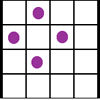
Square Corners

What is the greatest number of counters you can place on the grid below without four of them lying at the corners of a square?
Age 7 to 11
Challenge Level Yellow star
Problem Primary curriculum Secondary curriculum

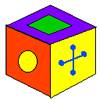
A Puzzling Cube

Here are the six faces of a cube - in no particular order. Here are three views of the cube. Can you deduce where the faces are in relation to each other and record them on the net of this cube?

Age 7 to 11
Challenge Level Yellow star
Problem Primary curriculum Secondary curriculum

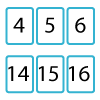
Mystery Matrix

Can you fill in this table square? The numbers 2 -12 were used to generate it with just one number used twice.
Age 7 to 11
Challenge Level Yellow starYellow star
Problem Primary curriculum Secondary curriculum

Twenty Divided Into Six

Katie had a pack of 20 cards numbered from 1 to 20. She arranged the cards into 6 unequal piles where each pile added to the same total. What was the total and how could this be done?

Age 7 to 11
Challenge Level Yellow starYellow star
Problem Primary curriculum Secondary curriculum

Heads and Feet

On a farm there were some hens and sheep. Altogether there were 8 heads and 22 feet. How many hens were there?

Age 5 to 7
Challenge Level Yellow starYellow star
Problem Primary curriculum Secondary curriculum

In a Box

Chris and Jo put two red and four blue ribbons in a box. They each pick a ribbon from the box without looking. Jo wins if the two ribbons are the same colour. Is the game fair?

Age 14 to 16
Challenge Level Yellow starYellow star
Problem Primary curriculum Secondary curriculum

Attractive Tablecloths

Charlie likes tablecloths that use as many colours as possible, but insists that his tablecloths have some symmetry. Can you work out how many colours he needs for different tablecloth designs?

Age 14 to 16
Challenge Level Yellow starYellow star
Problem Primary curriculum Secondary curriculum

Marbles in a Box

How many winning lines can you make in a three-dimensional version of noughts and crosses?
Age 11 to 16
Challenge Level Yellow starYellow star
Problem Primary curriculum Secondary curriculum

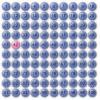
Two and Two

How many solutions can you find to this sum? Each of the different letters stands for a different number.
Age 11 to 16
Challenge Level Yellow starYellow starYellow star
Problem Primary curriculum Secondary curriculum

Where Can We Visit?

Charlie and Abi put a counter on 42. They wondered if they could visit all the other numbers on their 1-100 board, moving the counter using just these two operations: x2 and -5. What do you think?

Age 11 to 14
Challenge Level Yellow starYellow star
Problem Primary curriculum Secondary curriculum

Funny Factorisation

Using the digits 1 to 9, the number 4396 can be written as the product of two numbers. Can you find the factors?

Age 11 to 16
Challenge Level Yellow starYellow star
Problem Primary curriculum Secondary curriculum

How Old Am I?

In 15 years' time my age will be the square of my age 15 years ago. Can you work out my age, and when I had other special birthdays?
Age 14 to 16
Challenge Level Yellow star
Problem Primary curriculum Secondary curriculum

Dozens

Can you select the missing digit(s) to find the largest multiple?

Age 7 to 14
Challenge Level Yellow star
Problem Primary curriculum Secondary curriculum

4 Dom

Use these four dominoes to make a square that has the same number of dots on each side.

Age 5 to 11
Challenge Level Yellow starYellow starYellow star

  • Tech help
  • Accessibility Statement
  • Sign up to our newsletter
  • Twitter X logo

The NRICH Project aims to enrich the mathematical experiences of all learners. To support this aim, members of the NRICH team work in a wide range of capacities, including providing professional development for teachers wishing to embed rich mathematical tasks into everyday classroom practice.

NRICH is part of the family of activities in the Millennium Mathematics Project.

University of Cambridge logo NRICH logo